
Author

admin

Browsing

The US government has imposed a 93.5 percent anti-dumping tariff on battery-grade graphite imports from China, targeting what officials have described as unfairly low-priced shipments.

They claim domestic producers have been undercut, and have cited concerns over critical minerals dependence.

The US Department of Commerce announced the duty on Thursday (July 17) after an investigation prompted by from US manufacturers, who argued that Chinese producers were flooding the market with underpriced graphite.

The new duty, when combined with existing countervailing tariffs, raises the total effective rate to around 160 percent, according to the American Active Anode Material Producers (AAAMP), the coalition that filed the complaint.

The move affects roughly US$347 million worth of Chinese graphite imports, according to commerce department estimates, and comes as US policymakers scramble to secure critical mineral supply chains.

“Commerce’s determination proves that China is selling [active anode material] at less than fair value into the domestic market,” Erik Olson, a spokesperson for AAAMP, said in a Thursday press release.

The department said final rulings on both anti-dumping and anti-subsidy investigations will be announced by December 5.

A separate ruling in May placed a 6.55 percent preliminary countervailing duty on most Chinese producers, but singled out Huzhou Kaijin New Energy Technology and Shanghai Shaosheng for exceptionally high rates — 712.03 percent and 721.03 percent, respectively.

Graphite’s importance draws new scrutiny

While graphite rarely draws headlines like lithium or cobalt, it comprises up to 50 kilograms of every electric vehicle (EV) battery, forming the anode — a component as essential as the more widely discussed cathode.

China accounts for roughly 95 percent of global anode production, according to data from SNE Research.

Imports from China represented two-thirds of the 180,000 metric tons (MT) of graphite products shipped to the US in 2023, BloombergNEF data shows. Industry analysts say the new duties could significantly reshape market economics — especially for foreign battery suppliers that serve US automakers.

Supporters of the decision, including domestic producers and some lawmakers, argue the tariffs are a long-overdue corrective measure to level the playing field and stimulate US production.

“The decision today underscores the strategic importance of building a domestic supply chain for critical minerals, including synthetic graphite, in North America,” said Michael O’Kronley. “It affirms our business strategy as well as the diversification strategy of our customers to source critical battery materials and components locally.’

O’Kronley is CEO of Novonix (ASX:NVX,NASDAQ:NVNXF), which is building one of the largest synthetic graphite facilities in North America with support from a US$750 million US Department of Energy loan.

Westwater Resources (NYSEAMERICAN:WWR), which is constructing a graphite plant in Alabama, said the ruling provides the policy clarity and market signals needed to accelerate domestic graphite production.

“These two rulings by the DOC are distinct from legislative-driven global trade tariffs,” said Chief Commercial Officer Jon Jacobs in a statement of support. “They reflect long-term support for US-based graphite production.”

The company expects to produce 12,500 MT of graphite in 2026 and ramp up to 50,000 MT annually by 2028.

Despite efforts to boost local production, US automakers and battery makers warn that domestic graphite supply remains years away from meeting commercial demand — either in scale or purity.

In filings with the commerce department, Tesla (NASDAQ:TSLA) cautioned that US producers have yet to demonstrate the technical ability to deliver the quality needed for EV batteries. Panasonic (OTC Pink:PCRFF,TSE:6752) echoed similar concerns, and both companies opposed the tariff earlier this year.

This leaves companies with a difficult choice: pay sharply higher prices for Chinese imports or risk shortages from an unproven local market.

Trade frictions add to supply chain strain

The timing complicates matters further. Just days before the US tariff announcement, China finalized new export controls on key battery technologies, including those used in lithium iron phosphate (LFP) cells — an area where China leads globally. The combination of trade restrictions on both sides is stoking fears of a wider resource standoff.

For US automakers, the downstream pressure is immediate. The tariff could wipe out up to 20 percent of the value of production tax credits under the Inflation Reduction Act, while added import costs may ripple through the supply chain.

Higher battery costs could also push EV sticker prices further upward, straining affordability and slowing adoption.

But experts caution that breaking China’s dominance in graphite will not be quick or easy. According to the International Energy Agency, developing alternative supply chains for battery materials could take years, if not decades — especially given the high purity and consistency required in EV-grade materials.

Still, supporters argue the short-term pain is worth the strategic payoff. “It’s a very strong signal that they are intent on fostering an ex-China supply chain,” Ben Lyons of Jarden told the Financial Times.

Securities Disclosure: I, Giann Liguid, hold no direct investment interest in any company mentioned in this article.
This post appeared first on investingnews.com

Oil Prices Rebound After Trump’s Criticism of Fed Chair Powell

On April 22, 2025, oil prices rebound experienced a modest rebound following a significant drop the previous day. The initial decline was triggered by President Donald Trump’s renewed criticism of Federal Reserve Chair Jerome Powell, which unsettled financial markets and raised concerns about the central bank’s independence.

Market Reaction to Political Commentary

President Trump’s comments on Monday intensified investor fears regarding the Federal Reserve’s autonomy in setting monetary policy. The criticism led to a broad sell-off in equities and commodities, with oil prices bearing the brunt of the market’s anxiety.

Short-Covering Leads to Price Recovery

Despite the initial plunge, oil prices rebound edged higher on Tuesday as investors engaged in short-covering. Brent crude futures rose 0.5% to $66.62 per barrel, while West Texas Intermediate (WTI) crude for May delivery increased by 1% to $63.73 per barrel. The more actively traded WTI June contract also gained 0.7% to $62.84 per barrel.

Ongoing Economic Concerns

Market participants remain cautious amid ongoing fears of a potential recession linked to U.S. tariff policies and concerns over Federal Reserve independence. These factors have increased worries about the U.S. economy and crude demand. Additionally, progress in U.S.-Iran nuclear deal talks has eased supply concerns, potentially impacting oil prices further.

As the situation evolves, investors will closely monitor geopolitical developments and central bank communications to assess the potential long-term impacts on the energy markets.

Source: BloomBurg

The post Oil Prices Rebound After Trump’s Criticism of Powell appeared first on FinanceBrokerage.

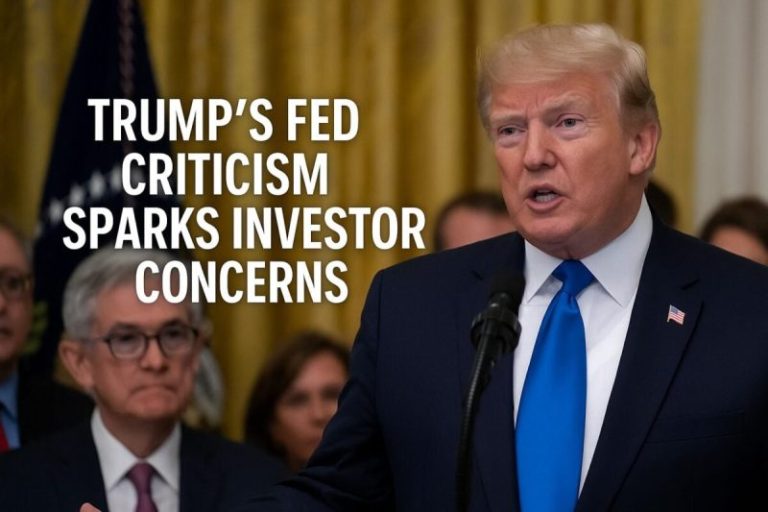
Trump’s Fed Criticism Sparks Investor Concerns

The recent spotlight on Trump’s Fed Criticism has sparked unease among investors and financial analysts alike. President Donald Trump’s repeated public attacks on Federal Reserve Chair Jerome Powell have amplified concerns over the central bank’s independence. As a result, markets have reacted with volatility, and investor sentiment has taken a noticeable hit.

Market Reactions to Political Pressure

Wall Street’s response to Trump’s Fed Criticism was swift. Major stock indices, including the S&P 500 and Nasdaq, posted losses amid uncertainty over future monetary policy decisions. Investors fear that political attempts to sway the Federal Reserve’s agenda may undermine its objectivity. If monetary policy is dictated by short-term political goals rather than long-term economic data, the implications could be severe for inflation, interest rates, and overall economic health.

Why Federal Reserve Independence Matters

One of the cornerstones of a stable economy is a politically neutral central bank. Trump’s Fed Criticism has called that neutrality into question. The Federal Reserve must be able to act without external pressure to maintain credibility in the eyes of global markets. Political interference could compromise its ability to control inflation or manage unemployment rates effectively.

Investor Sentiment and Future Outlook

Investor confidence remains fragile. Many market participants have shifted assets into safer investments such as gold and U.S. treasuries, seeking shelter from potential turmoil. Economic advisors stress the importance of maintaining clear, data-driven policy guidance, especially as the U.S. navigates ongoing trade issues and inflation concerns.

In the coming weeks, the Federal Reserve’s actions will be closely watched. Should Trump’s Fed Criticism intensify, it could further erode market stability and investor trust in U.S. monetary policy.

Source: Yahoo Finance


The post Trump’s Fed Criticism Sparks Investor Concerns appeared first on FinanceBrokerage.

Buy Bitcoin Under $100K Before The Next Bull Run

The opportunity to buy Bitcoin under $100K may not last much longer. On April 21, 2025, Bitcoin (BTC) traded just below the $100,000 mark, a price level many analysts believe could be the last stop before a massive new rally begins. With institutional adoption rising and macroeconomic pressures easing, the case for long-term BTC growth is strengthening.

Why Now Might Be the Time to Buy Bitcoin Under $100K

Market experts point to several factors fueling the bullish sentiment. Firstly, Bitcoin’s halving event earlier this year significantly reduced block rewards, cutting daily supply by half. Historically, halving events have preceded major bull runs. Secondly, growing interest from ETFs and institutional players is creating steady buying pressure. Lastly, declining inflation and improved global liquidity conditions are encouraging investment in risk assets like Bitcoin.

According to Bitwise CIO Matt Hougan, “It’s not too late to buy Bitcoin under $100K. This could be one of the last best opportunities before we see a surge well beyond six figures.”

Long-Term Outlook for BTC Investors

Looking ahead, many analysts predict that Bitcoin could exceed $150,000 by the end of the year. While this isn’t guaranteed, trends in institutional adoption, limited supply, and rising use cases for Bitcoin suggest that prices may continue climbing.

Although short-term volatility persists, long-term investors remain focused on fundamentals. If history repeats itself, buying Bitcoin at sub-$100K levels may prove to be a decision rewarded in the coming cycle.

Final Thoughts

If you’ve been on the sidelines, now could be your moment to enter the market. The chance to buy Bitcoin under $100K might not last much longer. As always, do your research and consider your financial goals before investing.

Source: Yahoo Finance

Related: Bitcoin News | Crypto Analysis

The post Buy Bitcoin Under $100K Before The Next Bull Run appeared first on FinanceBrokerage.

BNB Price Surge Leads Crypto Gains as Bitcoin Climbs

The BNB price surge on April 21, 2025, stole the spotlight as Binance Coin jumped over 3.2% to cross the $600 mark. This move came as Bitcoin soared past $87,000, reigniting investor interest in altcoins. The bullish wave didn’t stop with BNB—SOL and XRP also made strong moves, reflecting a positive trend across the cryptocurrency market.

BNB Price Surge Driven by Token Burn and Momentum

Fueling the BNB price surge was Binance’s recent $1 billion token burn, which reduced the circulating supply. Additionally, increased trading volumes and renewed faith in Binance’s ecosystem helped BNB regain upward momentum. Investors are optimistic that Binance’s expansion and focus on compliance could drive long-term growth.

SOL Rally and XRP Breakout Add to Market Optimism

Solana (SOL) saw a 10.2% rally, breaking above the $135 resistance level with strong volume and technical confirmation. XRP, on the other hand, climbed past $2.10, setting the stage for a potential breakout above $2.15. These moves indicate bullish setups that are gaining attention from both traders and long-term holders.

Bitcoin Reinforces Its Role as Digital Gold

Bitcoin’s rise above $87,000 reflects renewed demand for a digital safe-haven. With increasing global economic uncertainty and inflation concerns, many investors view Bitcoin as “digital gold.” This sentiment is spilling over into altcoins, triggering the current crypto rally.

Conclusion and Market Outlook

The BNB price surge highlights growing investor confidence in altcoins. Alongside Bitcoin’s strength, tokens like SOL and XRP are enjoying increased attention. If this trend continues, more gains could be ahead for altcoin markets. Investors should monitor resistance levels and trading volumes closely for signs of sustained momentum.

Source: Yahoo Finance

Related: Crypto Updates | Market Trends

The post BNB Price Surge Leads Crypto Gains as Bitcoin Climbs appeared first on FinanceBrokerage.

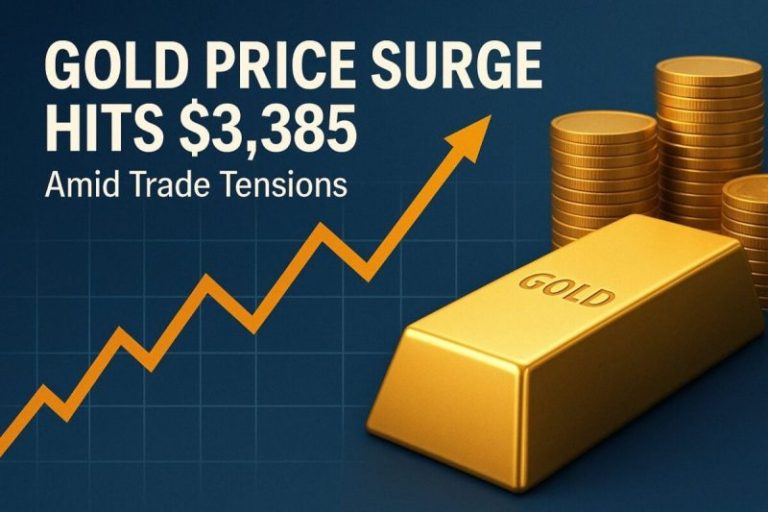
Gold Price Surge Hits $3,385 Amid Trade Tensions

The gold price surge continued on April 21, 2025, as gold hit a record high of $3,385 per ounce. This milestone came amid a weakening U.S. dollar and renewed global trade tensions. Investors are increasingly turning to gold as a safe-haven asset, signaling market uncertainty and shifting investment strategies.

Gold Price Increase Driven by Dollar Weakness

The U.S. dollar index fell sharply, hitting its lowest level since January 2024. A weaker dollar typically boosts gold prices, as it makes the metal more attractive to international buyers. This contributed significantly to the ongoing gold price surge seen in recent weeks.

In addition, economic data indicating slower growth in key global markets has prompted investors to reduce their exposure to riskier assets. Gold’s long-standing reputation as a hedge against economic uncertainty has once again proven true.

Trade Tensions Fuel Demand for Safe-Haven Assets

Ongoing trade friction between major economies—particularly the U.S. and China—has triggered market anxiety. Announcements related to new tariffs and supply chain risks are further motivating the shift from equities to gold. This environment is ideal for a gold price surge to gain momentum.

Analysts Predict Continued Gold Price Growth

Market analysts suggest that the upward trend is far from over. If inflation persists and interest rates remain steady or fall, the gold price could climb even higher. Some predict that the next psychological barrier of $3,500 per ounce may soon be tested.

As the global economic landscape continues to evolve, gold is expected to remain a central pillar in investor portfolios. Whether as a hedge against inflation or a response to geopolitical unrest, the gold price surge is being closely monitored by financial experts.

Source: Yahoo Finance

Related: Market Insights | Commodity News

The post Gold Price Surge Hits $3,385 Amid Trade Tensions appeared first on FinanceBrokerage.

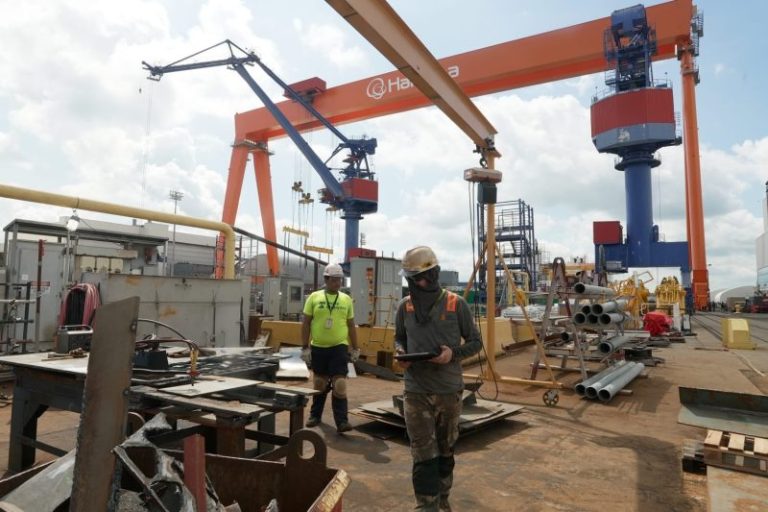
The U.S. shipbuilding industry is looking for help. A South Korean company is answering the call.

Hanwha Philly Shipyard CEO David Kim, nodding to the gargantuan vessels under construction just off the Delaware River, on Wednesday offered the kind of vision that has brought some optimism back to the U.S. shipbuilding community.

“You take that level of experience, the technology that we have, the know-how, the process expertise, and so clearly, we believe we have a lot to bring to the Philly Shipyard, as well as to the U.S. maritime industrial base, in terms of modernization capacity,” he said on a walkthrough of the shipyard.

Hanwha Philly Shipyard CEO David Kim.Obtained by NBC News

Hanwha Group bought the Philly Shipyard in December for $100 million and plans to invest multiple times that amount in the yard, training over a thousand new workers and bringing in new high-tech equipment. The company hopes to build naval ships and become the first U.S. builder of specialized liquefied natural gas tankers.

Shipbuilding in the United States has been all but dormant. China, South Korea, Japan and Europe all produce far more ships than the United States, with the few shipyards still operating in the country concentrating on military ships.

Revitalizing shipbuilding has been one of the areas President Donald Trump has pointed to as part of a broader effort to bring manufacturing back to the United States — a move some see as shortsighted considering the costs associated with building the kind of gigantic modern ships that remain a core part of how goods and commodities move around the planet.

This post appeared first on NBC NEWS

President Donald Trump said Wednesday that Coca-Cola in the United States will begin to be made with cane sugar, but the company did not explicitly say that was the case when it was asked later about Trump’s claim.

Trump said Wednesday afternoon on Truth Social that he had been speaking to Coca-Cola about using cane sugar in the sodas sold in the United States and that the company agreed to his idea.

‘This will be a very good move by them — You’ll see. It’s just better!’ Trump wrote in the post.

But Coca-Cola did not commit to the change when NBC News asked it later about Trump’s post.

‘We appreciate President Trump’s enthusiasm for our iconic Coca-Cola brand,’ a company spokesperson said in a statement. ‘More details on new innovative offerings within our Coca-Cola product range will be shared soon.’

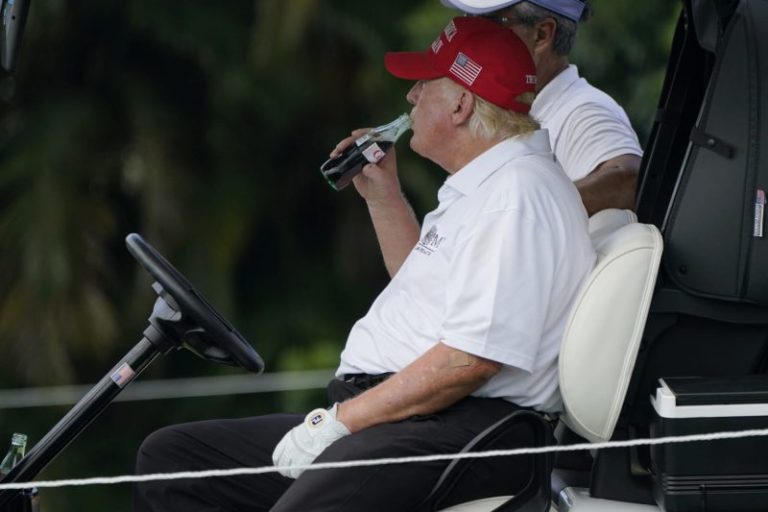
Donald Trump drinks a Diet Coke during the ProAm of the LIV Golf Team Championship at Trump National Doral Golf Club, on Oct. 27, 2022, in Doral, Fla.Lynne Sladky / AP file

It remains unclear whether Coca-Cola agreed to Trump’s proposal or whether the beloved soda will still be made with corn syrup.

The Trump administration’s Make America Healthy Again initiative, named for the social movement aligned with Health Secretary Robert F. Kennedy Jr., has pushed food companies to alter their formulations to remove ingredients like artificial dyes.

Coca-Cola produced for the U.S. market is typically sweetened with corn syrup, while the company uses cane sugar in some other countries, including Mexico and various European countries.

Coca-Cola announced in 1984 it was going to “significantly increase” the amount of corn syrup it was using in its U.S. products, The New York Times reported at the time.

Coca-Cola said it would use corn syrup to sweeten bottled and canned Coke, as well as caffeine-free Coke, but left itself “flexibility” to use other sweeteners, like sugar or high-fructose corn syrup, the Times reported.

Kennedy has criticized how much sugar is consumed in the American diet and has said updated dietary guidelines released this summer will advise people to ‘eat whole food.’

Trump has been known to enjoy Coca-Cola products. The Wall Street Journal reported that a Diet Coke button, which allows him to order the soda on demand, has joined him in the Oval Office for both of his terms.

This post appeared first on NBC NEWS

President Donald Trump said Wednesday it was ‘highly unlikely’ he would fire Jerome Powell as chair of the Federal Reserve.

His statements, made in the Oval Office, come less than 24 hours after telling a room full of Republican lawmakers that he was considering doing so.

“No, we’re not planning on doing anything,” Trump told reporters in response to a question about whether he wanted to fire Powell.

“I don’t rule out anything but I think it’s highly unlikely unless he has to leave for fraud,” Trump said, while criticizing Powell’s management of a Fed renovation project that the White House had recently floated as a pretext for removing the Fed chair.

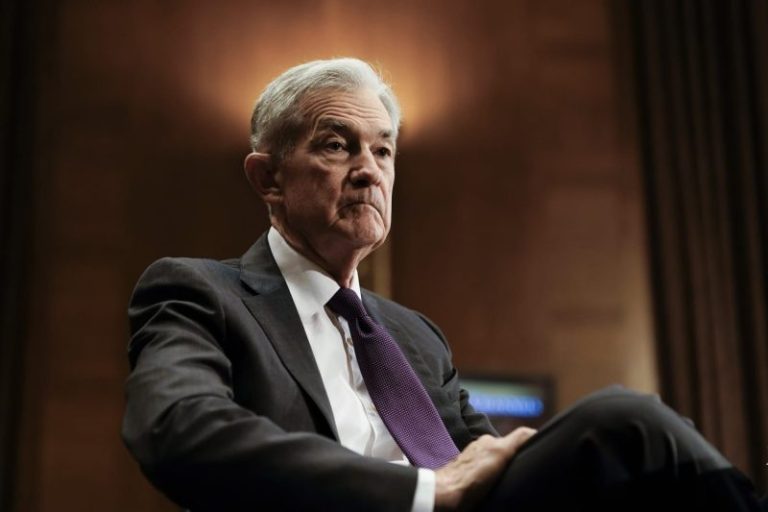
Fed Chair Jerome Powell testifies before the Senate Banking, Housing and Urban Affairs Committee on June 25. Kent Nishimura / Getty Images

The president had asked GOP lawmakers late Tuesday how they felt about firing the Fed chair, according to a senior White House official. They expressed approval for firing him. The president then indicated he likely would soon but that no final decision had been made.

Still, Rep. Anna Paulina Luna, R-Fla., posted on X on Tuesday night that Powell’s firing was ‘imminent,’ something that prompted a sell-off in stock futures before Wednesday’s market open. By noon Wednesday, major stock indexes had recovered to trade almost flat on the day.

CBS News first reported the meeting. A Fed official declined comment to CNBC on the report about the Trump meeting Tuesday, which came after Republicans blocked a procedural vote on crypto legislation that the president favors.

Trump and other White House figures have launched a multipronged attack on Powell to push the central bank to lower its key borrowing rate. Most recently, they have blasted Powell over renovations to the Fed’s Washington headquarters, raising suspicion that Trump could try to remove him for cause.

A recent Supreme Court decision indicated that the president does not have the authority to remove Fed officials at will.

In a CNBC interview Wednesday, Rep. French Hill, R-Ark., the chair of the House Financial Services Committee, repeated that “I don’t see” Trump firing Powell. Treasury Secretary Scott Bessent also told Bloomberg News on Tuesday that he didn’t expect Trump to move in that direction.

However, Luna, who on Tuesday joined with other party members in blocking the crypto initiative, said on X that a move against Powell is forthcoming.

“Hearing Jerome Powell is getting fired! From a very serious source,” she said, later adding, “I’m 99% sure firing is imminent.”

This post appeared first on NBC NEWS

Consumer prices rose in June as President Donald Trump’s tariffs began to slowly work their way through the U.S. economy.

The consumer price index, a broad-based measure of goods and services costs, increased 0.3% on the month, putting the 12-month inflation rate at 2.7%, the Bureau of Labor Statistics reported Tuesday. The numbers were right in line with the Dow Jones consensus, though the annual rate is the highest since February.

Excluding volatile food and energy prices, core inflation picked up 0.2% on the month, with the annual rate moving to 2.9%, with the annual rate in line with estimates. The monthly level was slightly below the outlook for a 0.3% gain.

A worker prices produce at a grocery store in San Francisco, California, US, on Friday, June 7, 2024.David Paul Morris / Bloomberg via Getty Images

Prior to June, inflation had been on a generally downward slope for the year, with headline CPI at a 3% annual rate back in January and progressing gradually slower in the subsequent months despite fears that Trump’s trade war would drive prices higher.

While the evidence in June was mixed on how much influence tariffs had over prices, there were signs that the duties are having an impact.

Vehicle prices fell on the month, with prices on new vehicles down 0.3% and used car and trucks tumbling 0.7%. However, tariff-sensitive apparel prices increased 0.4%. Household furnishings, which also are influenced by tariffs, increased 1% for the month.

Shelter prices increased just 0.2% for the month, but the BLS said the category was still the largest contributor to the overall CPI gain. The index rose 3.8% from a year ago. Within the category, a measurement of what homeowners feel they could receive if they rented their properties increased 0.3%. However, lodging away from home slipped 2.9%.

Elsewhere, food prices increased 0.3% for the month, putting the annual gain at 3%, while energy prices reversed a loss in May and rose 0.9%, though they are still down marginally from a year ago. Medical care services were up 0.6% while transportation services edged higher by 0.2%.

With the rise in prices, inflation-adjusted hourly earnings fell 0.1% in June, the BLS said in a separate release. Real earnings increased 1% on an annual basis.

Markets largely took the inflation report in stride. Stock market indexes were mixed while Treasury yields were mostly negative.

Amid the previously muted inflation ratings, Trump has been urging the Federal Reserve to lower interest rates, which it has not done since December. The president has insisted that tariffs are not aggravating inflation, and has contended that the Fed’s refusal to ease is raising the costs the U.S. has to pay on its burgeoning debt and deficit problem.

Central bankers, led by Chair Jerome Powell, have refused to budge. They insist that the U.S. economy is in a strong enough position now that the Fed can afford to wait to see the impact tariffs will have on inflation. Trump in turn has called on Powell to resign and is certain to name someone else to the job when the chair’s term expires in May 2026.

Markets expect the Fed to stay on hold when it meets at the end of July and then cut by a quarter percentage point in September.

This post appeared first on NBC NEWS